Biosphere 2: A Model City for Sustainability

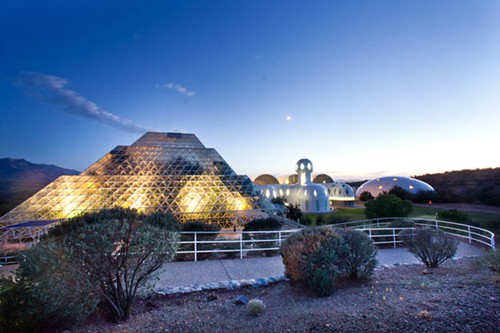
Researchers at Biosphere 2 are looking into the idea of a Model City. The idea is to make the 40-acre campus into a sustainable, solar-powered and energy-efficient example for municipalities to follow. Technologies for solar-powered grids and storage are being tested along with water-harvesting techniques.

Researchers at Biosphere 2 are looking into the idea of a Model City. The idea is to make the 40-acre campus into a sustainable, solar-powered and energy-efficient example for municipalities to follow. Technologies for solar-powered grids and storage are being tested along with water-harvesting techniques.

Like a city out of science fiction, Biosphere 2’s spaceship-like campus is a testing site for new solar technology.

In the coming months, photovoltaic panels for collecting solar energy will line the hills surrounding Biosphere 2 like a ring of power-generating armor. This is just part of a project led by Nathan Allen, sustainability coordinator and staff scientist, to turn the campus into an energy efficient model for cities.

The idea of a Model City is to use solar panels to power Biosphere 2’s 40-acre campus and use water-harvesting techniques to create what would be an example of an environmentally sound municipality with efficient energy generation and use.

The idea of a Model City is to use solar panels and water-harvesting techniques to create a prototype of how environmentally efficient technology can help reduce energy use and costs for communities that switch to sustainable technology.

“We got really excited when we heard about this idea of looking at energy use across something as large as the Biosphere,” said Leslie Tolbert, the senior vice president of research for the University of Arizona. “There’s a whole little city out there, so why not take advantage of the opportunity to do a scale of research that you can’t do anywhere else.”

Read More About the Model City

Comments Off on Biosphere 2: A Model City for Sustainability Posted in Articles

Bio View Science Magazine

Bio View Science Magazine

Above is a link to theBio View magazine (PDF) produced by a science journalism class at the University of Arizona School of Journalism. The magazine was designed by John de Dios, the Scryer Team leader and edited by Associate Professor Carol Schwalbe, a former senior text editor for the National Geographic Magazine. The magazine was produced as a separate project from the class. De Dios acted as the creative director, which duties included being the art director on top of designing the entire magazine.

This video was featured on Tucson Weekly and a collaboration between team leader John de Dios and Rogelio Garcia, another visual storyteller in Tucson, who collaborates with Scryer.

Comments Off on Posted in Video

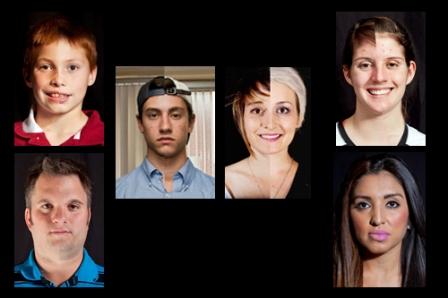
Composites of mirror twins. Clockwise from left: Peyton and Parker Pelletier, Zach and Derek Francis, Sydney and Taylor Lehman, Julie and Marie Fleming, Ariadna and Adriana Mencias, Patrick and Ryan Finley.

Composites of mirror twins. Clockwise from left: Peyton and Parker Pelletier, Zach and Derek Francis, Sydney and Taylor Lehman, Julie and Marie Fleming, Ariadna and Adriana Mencias, Patrick and Ryan Finley.

Twins Derek and Zachary Francis sit across from each other in Caffe Luce, a popular coffee shop near the University of Arizona campus. Their faces, still showing signs of youthful hormones, are nearly identical. Their hairstyles, their fashion styles and even their mannerisms are almost mirror images.

Derek, the older brother, has a wider jaw and short hair. A red string adorns his left wrist as he writes left-handed. Zachary, with his short hair coifed similar to his brother’s and a small birthmark behind his neck, is more reserved, listening to headphones while he scrolls through his computer with his right hand.

Read More on Scientific American Blog

Techno Tent City: Science and Literacy Celebrated | Scientific American Blog

sci_city_001

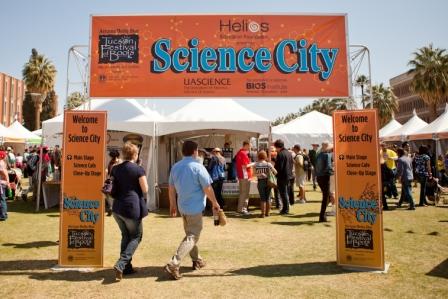
Six-year-old Brianna Toy sat anxiously on the black barstool. Hugging two pink dumbbells close to herself, Briana stretched out her legs in front of her, as the man with an accent and black, wide-brimmed leather hat better suited for the outback made ready to spin her around.

“Watch out for flying feet, folks,” the man announced, giving Brianna a nice push.

Brianna’s mom Angela Toy stood by, watching with a small group of people while hundreds of others sauntered past or meandered into the surrounding tents during on the sunny, spring afternoon in Tucson, Ariz.

Read More

Comments Off on Techno Tent City: Science and Literacy Celebrated | Scientific American Blog Posted in Articles

The Cosmic Collector

Adam Block, astrophotographer at the Mount Lemmon SkyCenter in Tucson Ariz., has been enamored by the night sky since he received his first telescope at the age of 7. Block talks about his love for astrophotography and how his curiosity of the cosmos grew from a hobby, into a profession.

This project was featured in Arizona Sonora News Service and Tucson Weekly.

Cutting Through the Stigma

Rollerblading is oftentimes stigmatized in the action sports community, and because of its lack of media exposure, the general public doesn’t understand what it is to the extent of what they know skateboarding, bmx, and other action sports to be. In this video four local rollerbladers attempt to illustrate what aggressive rollerblading is; a sport, an avenue of self-expression, and a lifestyle. This was a project I did for my multimedia journalism class.

It was featured on Tucson Weekly and also on Rollernews.